
Why are steel frames becoming the core choice for logistics expansion?
From e-commerce warehouses in Asia to distribution centers in North America, from cold chain facilities in Europe to logistics hubs in emerging markets, steel frame structures are becoming the default choice for global logistics construction. Behind this trend lies the logistics industry’s delicate trade-off between speed, cost, flexibility, and sustainability.
Industry Demand for Rapid Delivery
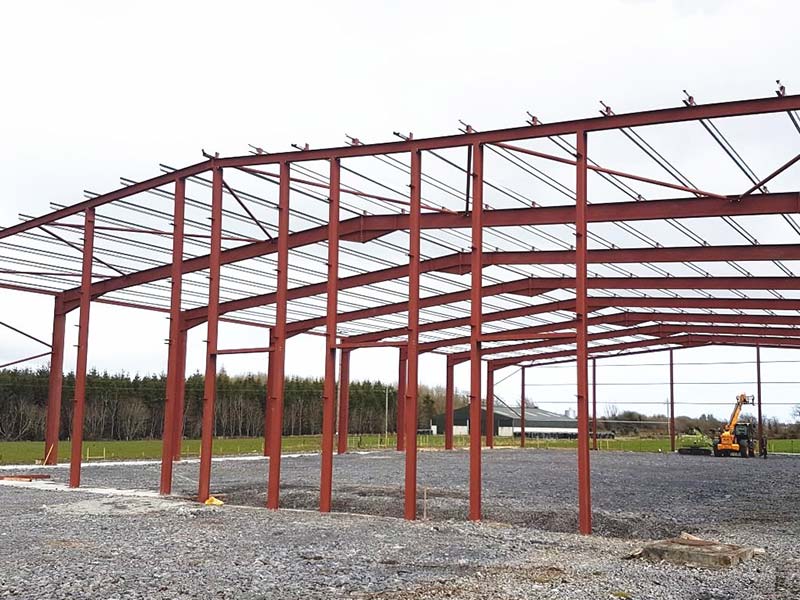
The core of competition in the logistics industry is speed—not only the speed of goods transportation but also the speed of facility construction. Precast steel components can be manufactured simultaneously in factories and quickly assembled on-site like “building blocks,” saving 30%-50% of construction time compared to traditional concrete structures. This time advantage directly translates into business competitiveness before major e-commerce sales seasons or when the supply chain urgently needs expansion.
Cost Efficiency
- Controllable Initial Investment: Steel prices are relatively stable, and prefabrication reduces on-site construction uncertainty.
- Low Maintenance Costs: Steel structure corrosion-resistant coating technology is mature, and long-term maintenance requirements are lower than traditional building materials.
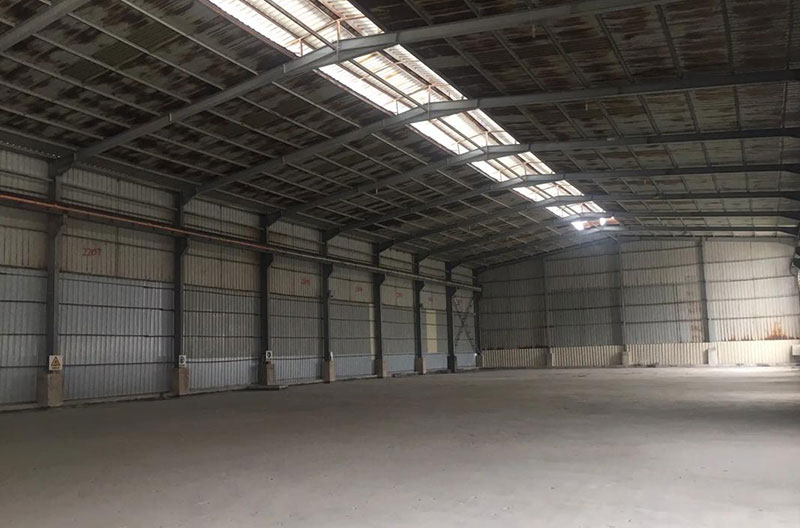
- Maximized Space Utilization: Large-span column-free designs (up to 100 meters and above) maximize storage and operating space.
Flexible Adaptability to Change
Logistics demands change rapidly with evolving consumption patterns and technological advancements. Steel frame structures offer:
- Easy Expansion: Facilitates horizontal expansion or vertical additions.
- Internal Reconfigurability: Crane systems and automated equipment are easily installed and adjusted.
- Technology-Friendly: Perfectly compatible with automated warehousing systems, robotic sorting lines, and other intelligent logistics equipment.
Sustainability Advantages
Modern logistics companies highly value ESG (Environmental, Social, and Governance) goals:
- Steel recycling rate up to 90%, materials can be recycled after building disposal.
- Lightweight Foundation: Reduces the amount of foundation concrete, lowering carbon emissions.
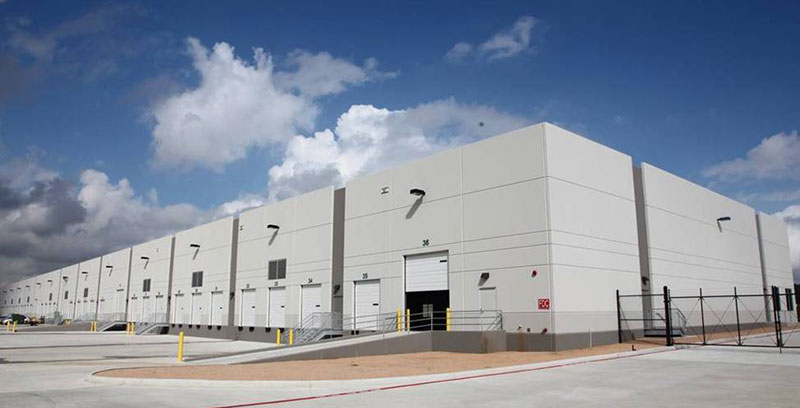
- Optimized Natural Lighting: Seamless integration with metal wall panels and skylight systems reduces lighting energy consumption.
- Photovoltaic Integration: Roof load-bearing capacity facilitates the installation of large-scale solar systems.
Global Standardization and Local Adaptation
The prefabricated nature of steel frames supports:
- Standardized Design: Multinational logistics companies can apply similar designs globally.
- Localized Production: Most regions have steel production and processing capabilities.
- Climate Adaptability: Adapting to diverse environments from deserts to ports through different coatings and insulation solutions.
Conclusion
The dominance of steel frames in the logistics sector is not the result of a single advantage, but rather a perfect match for the industry’s core needs. It provides physical spaces capable of adapting to unpredictable changes within a predictable cost and timeframe. In the current context of continuous restructuring of global supply chains and deepening e-commerce penetration, the value of this architectural solution will only become more apparent.
From warehouses to sorting centers, from distribution stations to cross-border hubs, steel frames are silently supporting the accelerating pulse of commodity flow. It is not merely the skeleton of a building, but the skeletal system of the modern logistics network.

