
What are the advantages of building industrial plant with steel structures?
In today’s global industrial landscape, where efficiency, sustainability, and cost-effectiveness are paramount, the choice of plant construction directly impacts a company’s operational resilience, expansion capabilities, and long-term competitiveness. Steel structures, with their inherent material advantages and advanced construction concepts, have become the preferred solution for modern industrial plant construction. Below is a comprehensive analysis of their core advantages.
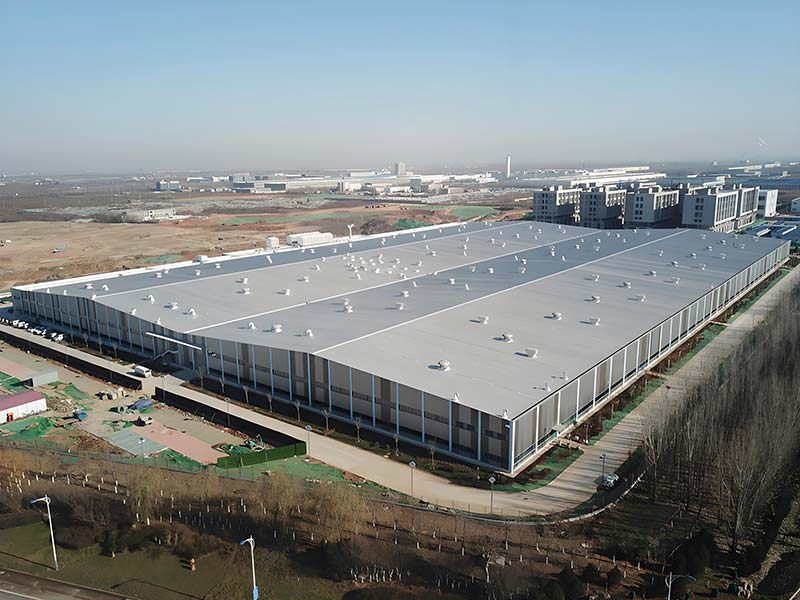
Advantages of Steel Structures
I. Extreme Speed, Rapid Production
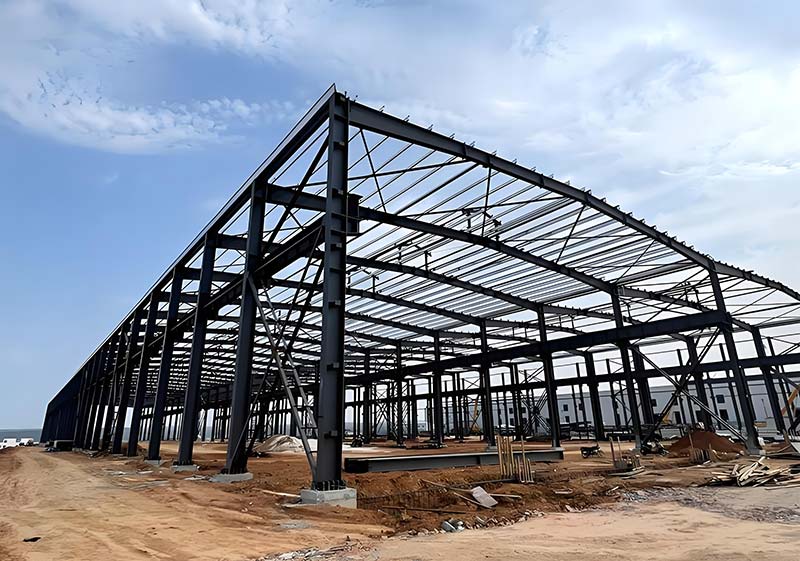
Time is the biggest cost. The core advantage of steel structure plants lies in their extremely short construction cycle.
- Parallel Operation: While the main steel components are prefabricated with high precision in the factory, foundation construction can be carried out simultaneously on-site, saving 30%-50% of the construction period compared to traditional concrete structures.
- Rapid Installation: After the prefabricated components arrive on site, they are mechanically hoisted and connected like “building blocks,” less affected by weather, ensuring on-time or even early project delivery and helping companies achieve a faster return on investment.
II. Superior Economic Efficiency and High Life-Cycle Value
Steel structure factory buildings demonstrate significant economic advantages in both initial investment and long-term operation.
- Lightweight and Low Foundation Costs: The weight of a steel structure is only 1/3 to 1/2 that of a concrete structure, significantly reducing the difficulty and cost of foundation treatment.
- High Material Utilization and Minimal Construction Waste: Factory prefabrication minimizes on-site material loss and construction waste.
- Low Maintenance Costs: Using high-quality anti-corrosion coatings and fire-resistant steel ensures high durability and simple maintenance. The total maintenance cost throughout the life cycle is far lower than that of traditional buildings.
III. Flexibility and Expandability
To cope with future market changes and technological upgrades, the flexibility of the factory building is crucial.
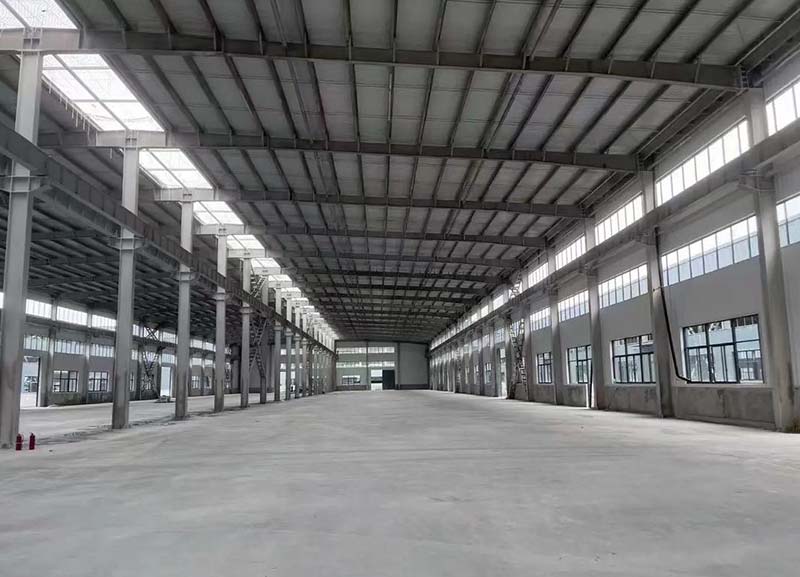
- Large-Span Column-Free Space: Steel structures can easily achieve clear spans of over 30 meters, providing an open and unobstructed floor plan, maximizing the use of area, and facilitating flexible adjustments to production lines.
- Easy to Modify and Expand: Modular design allows for rapid structural connection and coverage with minimal disruption and cost when adding production lines, increasing height, or expanding the factory in the future, perfectly adapting to business growth.
IV. Green and Sustainable, Future-Oriented
Steel structures are typical green buildings, aligning with the mainstream trend of global sustainable development.
- 100% Recyclable Materials: After the building reaches its service life, the steel can be fully recycled, resulting in a high resource recycling rate.
- Environmentally Friendly Construction Process: Primarily dry construction methods, minimizing on-site noise, dust, and wet work pollution.
- Compatible with Green Technologies: The roof easily accommodates large-area photovoltaic panels, and the walls can integrate high-efficiency insulation systems, significantly reducing operating energy consumption and helping businesses achieve carbon neutrality goals.
V. Robust, Durable, Safe, and Reliable
Industrial plants are the core carriers of assets and production, safety is paramount.
- High Strength and Toughness, Stable Performance: High strength and toughness of steel, combined with a lightweight structure, allow for excellent resistance to natural disasters such as earthquakes and strong winds.
- Controllable Quality: Core components are manufactured in standardized workshops, ensuring stable quality and high precision, providing a solid foundation for overall structural safety.
- Fire and Corrosion Resistance: Mature fire-retardant coatings, fire-resistant board wrapping, and anti-corrosion treatments such as galvanizing and spraying ensure the long-term safety of the building in harsh industrial environments.
Conclusion
Choosing steel structures to build industrial plant is not just choosing a building form, but also choosing an efficient, flexible, economical, and responsible industrial development model. It rapidly transforms investment into productivity, guarantees budgets with predictable cost control, and safeguards the future growth of enterprises with unparalleled adaptability. Globally, steel structure plants have become a solid physical foundation for driving industrial modernization and realizing intelligent manufacturing.
Whether you are planning an intelligent manufacturing workshop, a logistics and warehousing center, or a new energy production base, steel structures can provide you with a powerful, reliable, and future-oriented solution.

